
Solar Battery Grants, 0% VAT & Funding in Hertfordshire (2026)
Is there a grant for solar batteries in Hertfordshire? (The honest answer)
Let's clear up the question that brings most people to this page. As of 2026, there is no universal government grant that gives Hertfordshire homeowners a free solar battery, and any company promising one should be treated with caution. What does exist is genuinely worth having: solar panels and home batteries are zero-rated for VAT until 31 March 2027 (a 20% saving on the whole install), you can earn export income through the Smart Export Guarantee, and lower-income households on qualifying benefits may get help through the ECO4 scheme. There's also a separate £2,500 grant for thermal heat batteries via the Boiler Upgrade Scheme — which is not the same thing as a solar battery, and we explain the difference below so you aren't misled.
We're SOLA, an MCS-certified installer based in St Albans. We've completed 700+ installs across Hertfordshire, North London and the Buckinghamshire fringe, and we'd rather tell you exactly what's real than oversell a 'free battery' that doesn't exist. This guide walks through every incentive that genuinely applies to a Watford, St Albans, Hemel Hempstead or Hertford home in 2026 — what it saves, who qualifies, and where the catches are.
| Incentive | What it gives you | Who qualifies | Status (2026) |
|---|---|---|---|
| 0% VAT | 20% off solar + battery install | All UK homeowners | Ends 31 Mar 2027, then 5% |
| Smart Export Guarantee (SEG) | Paid per kWh exported | Anyone with MCS solar + smart meter | Ongoing, rates set by supplier |
| ECO4 | Funded/part-funded measures | Low-income / qualifying benefits | Extended to 31 Dec 2026 |
| Boiler Upgrade Scheme | £2,500 heat battery / £7,500 heat pump | Homes replacing fossil heating | Ongoing (thermal, not solar battery) |
| Solar Together Hertfordshire | Group-buy pricing | Herts residents who register | Periodic council-backed rounds |
0% VAT on solar and batteries — the biggest real saving (until March 2027)
This is the single most valuable incentive available to a typical Hertfordshire homeowner, and it's the one most people don't realise is a hard deadline. Since the Energy Saving Materials (ESM) VAT relief was introduced, qualifying residential solar PV installations have been zero-rated for VAT. Battery storage was brought into the same 0% relief from 1 February 2024 — and crucially, that now covers a battery installed on its own (retrofit) as well as a battery installed alongside new panels.
The important part: this 0% rate is currently legislated to end on 31 March 2027, after which the rate is set to return to 5%. There has been no government announcement extending it beyond that date. So a battery or solar-plus-battery system installed in 2026 carries no VAT; the same job in April 2027 would, on current rules, add 5%.
What that means in money. On a system priced between £4,295 and £14,995, the 0% rate is saving you the VAT you'd otherwise pay. On a typical £9,000 solar-and-battery install, zero-rating versus the old 20% standard rate is the difference of roughly £1,500 staying in your pocket. One catch worth knowing: the relief generally relies on a single MCS-certified installer supplying and fitting the system. If you buy panels from one company and have a different firm fit them, you can lose the relief — another reason a single accountable installer matters. See our pricing on the battery storage page for current system costs.
SEG export income — what a St Albans or Watford home realistically earns
The Smart Export Guarantee (SEG) is the mechanism that pays you for the surplus electricity your system sends back to the grid. It replaced the old Feed-in Tariff, and unlike a one-off grant it's an income stream that runs for years. To qualify you need an MCS-certified installation (this is why MCS matters for SEG and grant eligibility) and a smart meter capable of half-hourly export readings.
Rates are set by individual energy suppliers, not the government, and they move — sometimes more than once a year. As a reference point, Octopus Energy's flat Outgoing tariff sat at 15p/kWh from 2022 until it was reduced to 12p/kWh in March 2026; other suppliers offer flat rates broadly in the 5–15p/kWh range, with some time-of-use tariffs paying more at peak. Because these change, treat any figure as indicative and check the live rate when you install.
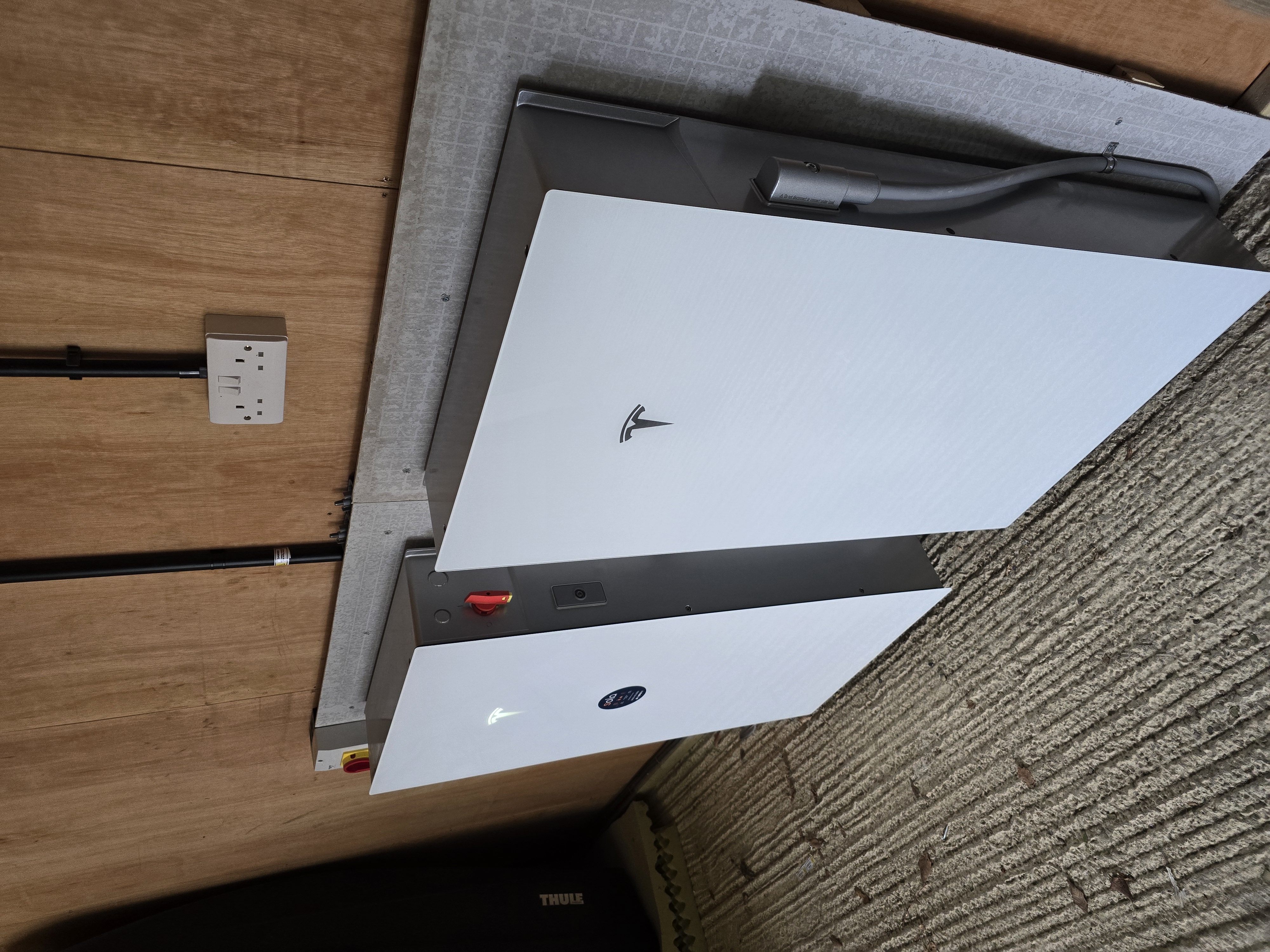
Where a battery changes the maths. Without a battery you export whatever you don't use the moment you generate it. With a SigEnergy or Tesla Powerwall battery you can store cheap or self-generated power and export it at the highest-paying times — for example via Tesla's Virtual Power Plant or Octopus Saving Sessions, where peak export can pay well above the flat rate. For a typical Hertfordshire home with a 4–5kWp array, realistic SEG income tends to land in the low-to-mid hundreds of pounds per year, and a battery's main value is usually bill avoidance (using your own stored power instead of buying at ~25p+/kWh) rather than export alone. Try our SEG calculator to see which battery grants and incentives apply to your usage, or the ROI calculator for a full battery grants, 0% VAT & SEG income picture.
ECO4 — who actually qualifies (and the honest limitations)
ECO4 (the fourth phase of the Energy Company Obligation) is the closest thing to a 'funded solar' scheme, but it's targeted, not universal. It's designed to help lower-income and vulnerable households improve the energy efficiency of poorly-insulated homes, and it was extended by the government to run until 31 December 2026.
Who qualifies. Eligibility is generally tied to receiving certain means-tested benefits (such as Universal Credit, Pension Credit, Child Tax Credit and others) or, in some areas, meeting a low-income threshold through your local authority's flexible eligibility (ECO Flex) route. Homes with a low EPC rating (typically D–G) are prioritised, because the scheme is about lifting the worst-performing housing stock.
The honest limitations. ECO4 takes a 'whole-house' approach — funding usually starts with insulation and heating, and solar PV is treated as a secondary measure that's added once the fabric of the home is sorted. Battery storage is generally only supported as part of a qualifying solar measure, not funded on its own. Funding is delivered through obligated energy suppliers and their approved installers, and availability varies. SOLA isn't an ECO4 delivery contractor, but if you think you might qualify we'll tell you honestly and point you toward the right route rather than waste your time — call us on 0800 470 0922 and we'll advise.
The £2,500 'heat battery' grant — don't confuse it with a solar battery
This one causes genuine confusion, so we'll be blunt: when people search for a 'battery grant' and find the £2,500 figure attached to the Boiler Upgrade Scheme, that grant is for a thermal heat battery, not the electrical solar battery (SigEnergy / Tesla Powerwall) that stores your solar electricity.
A thermal heat battery stores heat (for hot water and heating) and is part of the low-carbon heating world alongside heat pumps. The Boiler Upgrade Scheme (BUS) offers grants toward replacing fossil-fuel heating: as of 2026 that's up to £7,500 toward an air source heat pump and £2,500 toward a qualifying heat battery, with a temporary uplift to £9,000 for eligible off-gas oil/LPG homes from mid-2026. These are administered via Ofgem through MCS-certified heating installers.
An electrical solar battery — the kind that stores the power your panels generate so you can use it after dark — is not eligible for the BUS grant. Its support comes from the 0% VAT relief and the SEG export income described above. We flag this clearly because a few websites blur the two, and you don't want to budget for a £2,500 grant that doesn't apply to the product you're actually buying. If low-carbon heating interests you too, ask us — we can advise on heat pumps as well as solar and storage.
Solar Together Hertfordshire group-buy vs a direct MCS quote
Solar Together is a council-backed group-buying scheme that runs periodically across Hertfordshire — St Albans, Watford, Dacorum, North Herts, East Herts, Stevenage and neighbouring districts have all taken part. You register for free with no obligation, pre-vetted installers bid for the whole group's volume, and you receive a personal recommendation based on the winning bid. It's a legitimate, well-run scheme and for some households it's a sensible route.
How it compares.
| Solar Together group-buy | Direct MCS quote (e.g. SOLA) | |
|---|---|---|
| Pricing basis | Volume-bid, one winning installer for all | Bespoke to your roof and usage |
| System spec | Standardised package | Sized to your demand and budget |
| Panel / battery choice | Limited to winner's range | Aiko 485W, SigEnergy, Tesla Powerwall etc. |
| Timing | Fixed registration windows | Whenever suits you |
| Aftercare | Via the winning installer | Direct, local, one accountable team |
| Best for | Simple roofs, standard needs | Complex roofs, batteries, EV, max ROI |
Worked example: a St Albans home, before and after incentives
To make the numbers concrete, here's an illustrative St Albans semi with a south-facing roof fitting a mid-range solar-and-battery system. Figures are indicative for 2026 and rounded — your own survey-based quote will differ — but they show how the incentives stack.
The takeaway: there's no cheque in the post, but the 0% VAT removes a chunk of the cost up front, and the combination of bill savings plus SEG export income is what drives the payback. For most Hertfordshire homes a well-sized solar-and-battery system pays back over roughly 8–12 years and then runs for many more, with the panels warrantied well beyond that. The biggest lever in your control is timing the 0% VAT window before it closes on 31 March 2027. Get solar battery grants for St Albans homes assessed properly with a free survey — we'll size the system to your actual usage, not a one-size-fits-all package.
| Line | Amount (illustrative) |
|---|---|
| System price (solar + battery, incl. fitting) | ~£9,000 |
| VAT at 0% (saving vs 20%) | £0 charged (~£1,500 saved) |
| Net cost to you | ~£9,000 |
| Annual bill saving (self-use + battery) | ~£700–£1,100 |
| Annual SEG export income | ~£150–£350 |
| Indicative payback | ~8–12 years |
Why a local MCS-certified installer matters here
Every incentive on this page has MCS certification sitting underneath it. SEG payments require an MCS-certified install. The 0% VAT relief relies on a properly certified supply-and-fit. ECO4 and BUS both run through MCS-registered contractors. If the certification isn't right, the incentives can fall away — which is why the cheapest unaccredited quote can quietly cost you more.
SOLA is MCS-certified and a member of RECC and TrustMark. We're based in St Albans, we've completed 700+ installations across Hertfordshire and North London, and we fit Aiko 485W panels with SigEnergy and Tesla Powerwall storage. Because we're local, the team that surveys your roof is the team that fits it and the team you call afterward — no subcontracting, no call-centre. If you want a straight answer about which incentives genuinely apply to your home, call 0800 470 0922 or request a free, no-obligation survey.
Frequently Asked Questions
Do I qualify for a solar battery grant in Hertfordshire?
Most homeowners won't qualify for a direct 'free battery' grant because no such universal scheme exists. What you do get automatically is 0% VAT on the install (until 31 March 2027) and SEG export income. Lower-income households on qualifying benefits may get help via ECO4 (running to 31 December 2026). We'll assess your situation honestly — call 0800 470 0922.
Can I get a free solar battery?
As of 2026, no — there is no government scheme that gives a free electrical solar battery to ordinary homeowners, and you should be cautious of any company that claims otherwise. The real savings are the 0% VAT relief, bill reduction from storing your own power, and SEG export income. ECO4 can fund measures for qualifying low-income households, but a standalone free battery is not on offer.
Is battery storage 0% VAT?
Yes. Home battery storage has been zero-rated for VAT since 1 February 2024, whether it's fitted alongside new solar panels or retrofitted to an existing system. This 0% rate is currently set to end on 31 March 2027, after which it is expected to rise to 5%, so installing within the window is worth roughly the VAT you'd otherwise pay.
Does ECO4 cover batteries?
ECO4 generally supports battery storage only as part of a qualifying solar PV measure, not as a standalone funded item. The scheme prioritises insulation and heating for lower-income households in poorly-rated homes (EPC D–G), and was extended to 31 December 2026. Eligibility is usually tied to means-tested benefits or local-authority flexible criteria.
What is the £2,500 heat battery grant — is that for my solar battery?
No. The £2,500 grant from the Boiler Upgrade Scheme is for a thermal heat battery (part of low-carbon heating), not the electrical battery that stores your solar electricity. Your solar battery is supported by the 0% VAT relief and SEG income instead. We flag this because some sites blur the two and it can lead to incorrect budgeting.
How much can I earn from SEG export in Hertfordshire?
SEG rates are set by energy suppliers and change over time — for reference, Octopus's flat Outgoing tariff moved from 15p/kWh to 12p/kWh in March 2026, with other suppliers roughly in the 5–15p/kWh range. A typical Hertfordshire home with a 4–5kWp array earns in the low-to-mid hundreds of pounds per year; a battery lets you export at peak-paying times to push that higher.
Should I use Solar Together or get a direct quote?
Solar Together is a legitimate council-backed group-buy that can suit simple roofs and standard needs. A direct MCS quote usually wins when you want a system sized precisely to your usage, specific equipment (Aiko panels, SigEnergy or Tesla Powerwall batteries), battery or EV add-ons, flexible timing and local single-point aftercare. We're happy to quote against any group-buy offer so you can compare like for like.
When does the 0% VAT on solar and batteries end?
On current legislation the 0% VAT rate ends on 31 March 2027 and is then expected to return to 5%. There is no announced extension beyond that date. Battery storage has qualified for the 0% rate since 1 February 2024, so any time before the deadline you pay no VAT on a qualifying residential solar or battery install fitted by an MCS-certified installer.
Related pages
Get your free, no-obligation quote
MCS-certified local installers — 700+ installs across Hertfordshire & North London.