
Best SEG Rates UK 2026: Smart Export Guarantee Tariff Comparison
Quick answer: the best SEG rates right now (verified August 2026)
Best no-strings flat rate (any import supplier, no installer tie-in): Good Energy Solar Savings, 15p/kWh. Highest flat rate overall: Good Energy Solar Savings Exclusive at 25p/kWh, but only if Good Energy installed your system and supplies your electricity. Highest headline rate of all: Octopus Intelligent Flux, up to ~32p/kWh in the 4–7pm peak window, but it needs an Octopus-controlled battery and Octopus electricity, and as of April 2026 Octopus has paused new Flux sign-ups while wholesale prices settle.
If you just want a simple, switch-anytime rate and you don't want to move your import (the electricity you buy) supplier, Good Energy's 15p flat is the one to beat in mid-2026. If you've got a battery and want to chase the absolute top numbers, you're looking at Octopus's time-of-use tariffs (Flux / Intelligent Flux / Agile Outgoing) — which is exactly the kind of system we install.
Rates verified August 2026. SEG tariffs are variable and suppliers can change them on roughly 30 days' notice — always confirm the live rate on the supplier's own page before you switch. We're an MCS-certified installer in St Albans, not an energy supplier, so this guide is written to help you choose, not to sell you a tariff.
| What you want | Best pick (Aug 2026) | Rate | Catch |
|---|---|---|---|
| Simplest no-strings flat rate | Good Energy Solar Savings | 15p/kWh | None — open to any import customer |
| Highest flat rate | Good Energy Solar Savings Exclusive | 25p/kWh | They must have installed your system + supply your power |
| Highest headline rate (battery) | Octopus Intelligent Flux | up to ~32p/kWh peak | Octopus battery + Octopus electricity; paused for new sign-ups Apr 2026 |
| Best for existing British Gas dual-fuel | British Gas Export & Earn Plus | 15.1p/kWh | Gas + electricity both with British Gas |
| Highest fixed rate you can plan around | EDF Export Exclusive (12-month fix) | 24p/kWh | EDF import customers; fixed 12 months, so no mid-term cuts |
The full SEG rate comparison table (20+ tariffs, re-verified August 2026)
This is the centrepiece. Every rate below was cross-checked against supplier pages, MoneySavingExpert (updated 8 June 2026), Which? and Sunsave (updated 30 April 2026) before publishing. Where two sources disagreed we used the more conservative figure and flagged it.
A few things to read carefully. "Customer-only?" means you must buy your imported electricity from that same supplier to get the export rate — for most of the higher rates the answer is yes, and several of the very top rates also require that the supplier installed your system. "Flat vs ToU" matters a lot: a time-of-use (ToU) tariff pays a high headline rate only in a narrow window (often 4–7pm), and a much lower rate the rest of the day, so the headline number is not what you earn on every unit. The estimated annual figure assumes 2,400 kWh exported per year, which is a reasonable middle estimate for a ~4kW–5kW system in Hertfordshire with no battery; a battery changes this a lot (see below).
| Supplier | Tariff | Export rate (p/kWh) | Flat / ToU | Customer-only? | Est. £/yr (2,400 kWh)* |
|---|---|---|---|---|---|
| Octopus | Intelligent Flux | up to ~32.2p peak / ~24.1p off-peak | ToU | Yes — Octopus battery + supply (paused Apr 2026) | varies; battery-led |
| Octopus | Flux | up to ~29.3p peak / ~10.1p / ~5.0p night | ToU | Yes — Octopus supply (paused Apr 2026) | varies; battery-led |
| Good Energy | Solar Savings Exclusive | 25p | Flat | Yes — Good Energy installed + supply | £600 |
| Octopus | Outgoing Agile | tracks wholesale (avg ~9–10p, spikes higher) | ToU/half-hourly | Yes — Octopus supply | ~£225 |
| EDF | Export Exclusive 12m v3 | 18p | Flat | Yes — EDF installed + supply | £432 |
| E.ON Next | Next Export Premium v3 | 17.5p | Flat | Yes — installed + supply | £420 |
| Ecotricity | Smart Export Tariff | 16p | Flat | Yes — supply | £384 |
| British Gas | Export & Earn Plus | 15.1p | Flat | Yes — dual-fuel (gas + elec) | £362 |
| Good Energy | Solar Savings | 15p | Flat | No — open to any import customer | £360 |
| EDF | Export 12m (standard) | 15p | Flat | Yes — EDF supply | £360 |
| E.ON Next | Next Export Exclusive v3 | 13p | Flat | Yes — supply | £312 |
| Fuse Energy | Single Rate Variable | 13p | Flat | No | £312 |
| Octopus | Outgoing Octopus | 12p | Flat | Yes — Octopus supply | £288 |
| ScottishPower | SmartGen Premium | 12p | Flat | Yes — supply | £288 |
| OVO | SEG Beyond Exclusive | 12p | Flat | Yes — supply | £288 |
| E.ON Next | Next Flex Export v1 | 6p | Flat | No | £144 |
| ScottishPower | SmartGen (standard) | 6p | Flat | No | £144 |
| EDF | SEG Export Variable Value | 5.6p | Flat | Yes | £134 |
| Pozitive Energy | SEG tariff | 5p | Flat | No | £120 |
| So Energy | So Export Flex | 4.5p | Flat | No | £108 |
| Octopus | SEG (standard, non-supply) | 4.1p | Flat | No | £98 |
| OVO | SEG (standard) | 4p | Flat | No | £96 |
| British Gas | Export & Earn Flex | 3.02p | Flat | No | £72 |
| *Illustrative only: assumes 2,400 kWh/yr exported, flat rate applied across all units. ToU tariffs are not represented well by a single annual figure because earnings depend on when you export — a battery that time-shifts export into the peak window changes the maths entirely. |
British Gas Export & Earn Plus: 15.1p, but read the small print
If your gas and electricity are both already with British Gas, Export & Earn Plus is a genuinely competitive flat rate at 15.1p/kWh (verified August 2026). It sits right alongside Good Energy's 15p, and because it's a flat rate it's simple — no time-of-use windows to think about, you get paid the same for every unit you export.
The two things to know. First, it's dual-fuel customer-only: you need both your gas and electricity supply with British Gas to qualify. If you're electricity-only, or you'd have to switch your gas as well, factor that into the decision — sometimes the import savings or losses from switching outweigh a few pence on export. Second, and importantly for 2026: British Gas has announced that from July 2026 the 15.1p rate is being cut to 8p for larger systems above 15kW. For a typical domestic install (well under 15kW) the 15.1p rate is expected to continue, but this is a clear reminder that export rates move — confirm the current figure on the British Gas SEG page before you commit.
For most Hertfordshire homes we install (4kW–6kW), you're comfortably under the 15kW threshold, so the 15.1p rate applies — but if you're an existing British Gas dual-fuel customer it's worth comparing against Good Energy's no-strings 15p and Octopus's battery tariffs before settling.
Best SEG rate without switching your import supplier
This is the angle most comparison pages bury, and it's the one that matters most to people who are happy with the electricity supplier they already buy from. Most of the headline-grabbing rates are "customer-only" — you only get them if you also buy your imported electricity (and sometimes your whole system) from that supplier. That's fine if the import tariff is good too, but it's a tie-in.
The standout exception in mid-2026 is Good Energy Solar Savings at 15p/kWh flat, which is open to you regardless of who supplies your imported electricity. You can keep buying your power from whoever gives you the best import deal and still take Good Energy's 15p for your export. For a no-strings flat rate, nothing else comes close in June 2026 — the next genuinely open tariffs (Fuse 13p, then standalone tariffs at 4–6p) are well behind.
The trade-off to be honest about: Good Energy's 15p is a variable rate, so they can reduce it at their discretion on notice. It's not locked. But as a switch-anytime, no-tie-in option it's the strongest flat rate available without rearranging your import supply. If you'd rather not juggle two suppliers at all, it's the simplest good answer.
Highest rates with a battery: time-of-use arbitrage (Octopus Flux & Agile Outgoing)
This is where the genuinely big numbers live — and where the battery you install does the heavy lifting. The very top headline rates aren't flat: they're time-of-use tariffs that pay a premium only during a peak export window, typically 4–7pm when the grid is short of power.
Octopus Intelligent Flux advertises up to ~32p/kWh in that peak window and ~24p off-peak, but it requires an Octopus-controlled battery and Octopus electricity supply. Octopus Flux (the self-managed version) pays up to ~29p peak, ~10p mid, and as little as ~5p overnight. Important honesty note: as of April 2026 Octopus has paused new sign-ups to both Flux tariffs, citing volatile wholesale prices, and says they'll return once conditions settle — so check availability before banking on these. Octopus Agile Outgoing is a different beast: it tracks half-hourly wholesale prices, averaging around 9–10p but spiking far higher during evening peaks, which a battery can deliberately target.
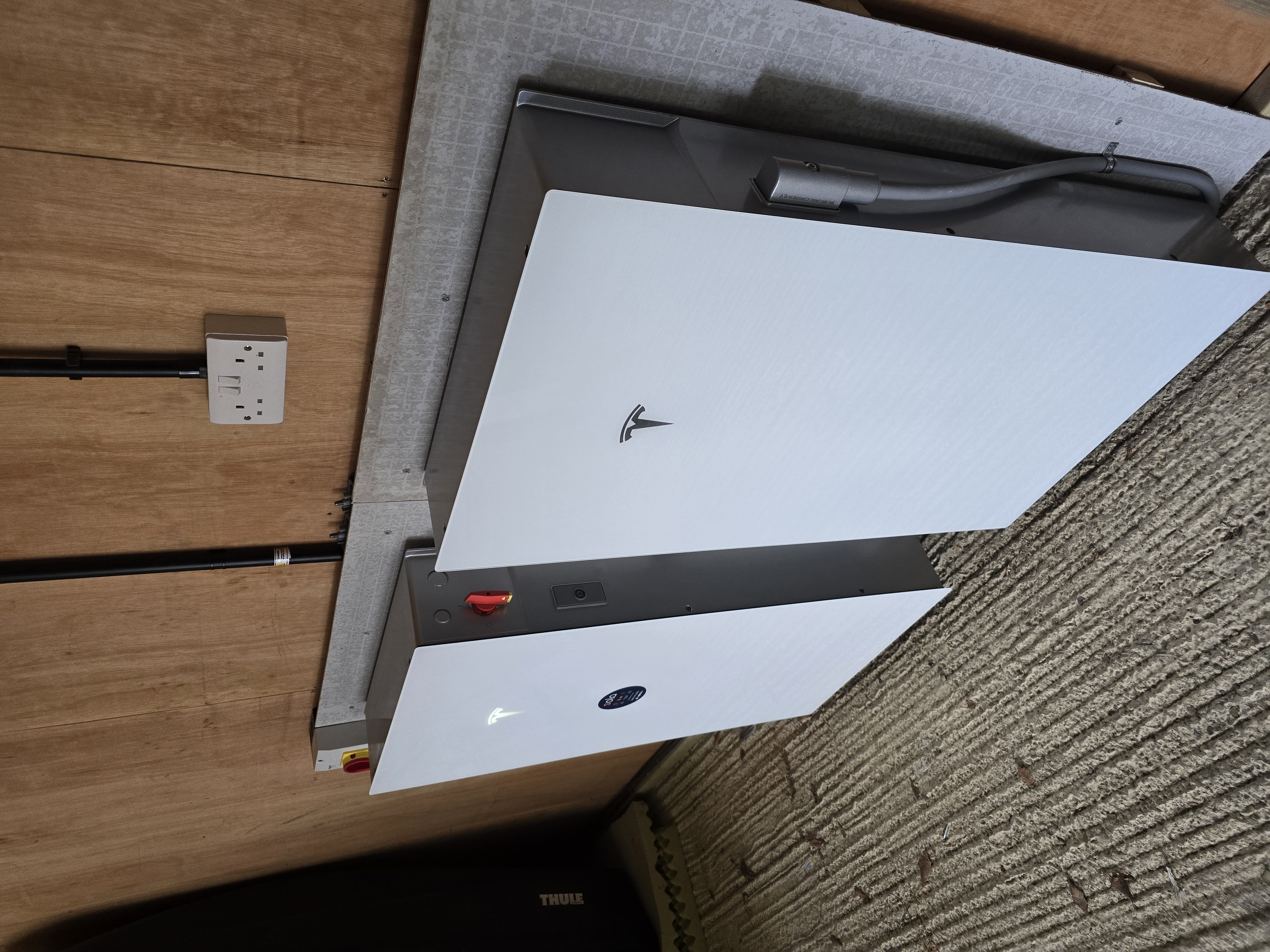
The reason a battery transforms the maths: without storage, you export whenever the sun is shining — which is usually the middle of the day, exactly when ToU rates are lowest. With a battery, you store cheap/free midday generation and discharge it to the grid at 4–7pm to hit the ~32p peak, or charge from a cheap overnight import tariff and export into the evening peak (true arbitrage). That's only possible with the right hardware. We fit SigEnergy and Tesla Powerwall battery systems precisely because they support the smart, scheduled export these tariffs reward — the battery is what unlocks the top of this table, not the tariff alone.
How the Smart Export Guarantee works (and why export pays less than import)
The Smart Export Guarantee (SEG) is the government-backed scheme, run by Ofgem, that obliges larger licensed electricity suppliers to pay you for surplus solar electricity you send back to the grid. It replaced the old Feed-in Tariff (FIT) for new installs from 1 January 2020. The key differences from FIT: SEG pays only for what you actually export (measured by your smart meter), not for everything you generate; there's no generation payment; and crucially each supplier sets its own rate, so the price you get is a competitive market, not a fixed government figure. That's why shopping around is worth real money.
To qualify you need an MCS-certified (or equivalent) solar PV installation up to 5MW, and a smart meter capable of half-hourly export readings (SMETS2 or a SMETS1 working in smart mode). Without a smart meter recording export, suppliers can't pay you — getting one fitted is usually the first practical step.
Why is export always worth less per unit than the electricity you buy? Because when you import you're paying for the energy plus all the network, balancing, policy and standing costs baked into a retail bill; when you export, the supplier is essentially buying raw wholesale energy off you, closer to the market price. That gap is normal and unavoidable — which is exactly why the single most valuable unit of solar you generate is the one you use yourself (avoiding ~25–30p of import) rather than export. The practical takeaway: size and use your system to maximise self-consumption first, then optimise the export rate on the surplus.
Methodology, freshness and who wrote this
How we built the table. The estimated annual figures assume 2,400 kWh exported per year — a realistic middle estimate for an unbattery'd 4kW–5kW system in the Hertfordshire / North London area, where annual generation typically lands around 3,400–4,200 kWh and roughly half to two-thirds is exported on a home that's empty during the day. Your real export depends on system size, orientation, occupancy and whether you have a battery; a battery can cut export volume (because you self-consume more) while raising the value of each exported unit on a time-of-use tariff. Treat the £/yr column as a like-for-like ranking aid, not a personalised quote.
Freshness. Rates verified August 2026 against supplier pages, Ofgem SEG guidance, MoneySavingExpert (updated 8 June 2026), Which? and Sunsave (updated 30 April 2026). SEG tariffs are variable and can change on roughly 30 days' notice — we re-check this table monthly, but always confirm the live rate on the supplier's own page before switching. Two live caveats at time of writing: Octopus has paused new Flux sign-ups (April 2026), and British Gas cut Export & Earn Plus to 8p for systems above 15kW in July 2026.
Sources: Ofgem (Smart Export Guarantee scheme rules), DESNZ (solar and net-zero policy), and the supplier tariff pages linked throughout. Written by the Sola UK content team and reviewed by an MCS-certified installer on our St Albans team — we install solar, battery and EV charging across Hertfordshire and North London, so the battery-arbitrage section reflects what we actually commission on real systems, not theory.
Frequently Asked Questions
Can I export to a different supplier than I import electricity from?
Sometimes, but not always. Many of the best SEG rates are "customer-only" — you only get them if you also buy your imported electricity from that supplier, and a few of the very top rates require that the supplier installed your system too. The notable no-strings exception in June 2026 is Good Energy Solar Savings at 15p/kWh, which you can take regardless of who supplies your imported power. So you can keep your existing import supplier and still get a strong export rate — just not the very highest battery tariffs, which need you on the same supplier.
Do I need a smart meter to get an SEG payment?
Yes. SEG payments are based on actual exported units measured half-hourly, so you need a smart meter operating in smart mode (a SMETS2, or a SMETS1 still communicating). Without one, suppliers can't measure your export and won't pay you. If you don't have a working smart meter, arranging one is normally the first step after your panels are commissioned.
Is SEG income taxable?
For the vast majority of homeowners, no. SEG payments on a domestic solar system are generally not taxable income — this is consistent with long-standing HMRC treatment of domestic microgeneration. Larger or commercial generation, or income beyond normal domestic use, can be treated differently, so if you're running a sizeable system or anything business-related, check with HMRC or an accountant. This is general guidance, dated June 2026, not tax advice.
What's the difference between SEG and the old Feed-in Tariff (FIT)?
FIT closed to new applicants on 31 March 2019 and paid both a generation tariff (for everything you produced) and an export tariff, at government-set rates often guaranteed for 20+ years. SEG, which took over for new installs from 1 January 2020, pays only for electricity you actually export, has no generation payment, and each supplier sets its own rate — so SEG rewards shopping around, while FIT was fixed. If you're on a legacy FIT agreement, you generally keep it; you don't move to SEG.
How do I apply for an SEG tariff?
Pick a supplier and tariff, then apply directly with that supplier (you don't have to use the company that sells you your electricity, unless the tariff is customer-only). You'll typically need your MCS certificate (or equivalent), proof of installation, your smart meter details and your MPAN. The supplier registers you, and payments usually start within a billing cycle or two. We provide every Sola UK customer with the MCS documentation you need to register, and can point you to the best-fit tariff for your system.
How much can a typical Hertfordshire home earn from SEG?
As a rough guide, an unbattery'd 4kW–5kW system in Hertfordshire might export around 2,000–2,800 kWh a year. On a 15p flat rate that's roughly £300–£420 a year; on a strong rate around 24–25p it's closer to £480–£700. Add a battery on a time-of-use tariff and you export fewer units but earn more per unit during the evening peak, plus you save far more on import — the combined benefit is usually larger than export alone. Your real figure depends on system size, orientation, occupancy and tariff. These are illustrative, June 2026.
Why does my export rate change?
Because most SEG tariffs are variable: suppliers set their own rates and can change them, typically on around 30 days' notice. Rates move with wholesale energy prices and competitive pressure — they've risen sharply since 2022 as suppliers compete for solar customers, but they can fall too (Scottish Power halved SmartGen from 12p to 6p in 2025, and British Gas cut its larger-system rate in July 2026). Always check the live rate on the supplier's own page before switching, and don't assume today's headline rate is locked in.
Related pages
- work out your own export earnings with our Smart Export Guarantee calculator
- unlock the highest export tariffs with a battery
- earn money exporting solar with the Smart Export Guarantee
- how much you'll earn from SEG export over time
- size your system and estimate generation
- track and maximise your SEG export earnings
- Smart Export Guarantee rates for Hertfordshire homes
- get a free quote for MCS-certified solar and battery
Get your free, no-obligation quote
MCS-certified local installers — 700+ installs across Hertfordshire & North London.