How Solar Panels Are Installed, Step by Step (UK 2026)
What actually happens on a UK solar installation, from roof assessment and system sizing to commissioning and handover: the process, not the pricing.
How Solar Panels Are Installed, Step by Step
Introduction
Solar panel installation in the UK has never been more attractive. With energy prices at historic highs and improved technology, homeowners are saving £800-£1,200 annually while reducing their carbon footprint.
This comprehensive guide covers everything you need to know about getting solar panels installed in your UK home.
Chapter 1: Is Solar Right for Your Home?
Roof Requirements
Your roof needs to meet these criteria:
- South, southeast, or southwest facing (optimal)
- Minimum 20 square meters of unshaded space
- Structurally sound to support 10-15kg per square meter
- Pitched roof between 10-50 degrees (flat roofs also possible)
Property Suitability
Ideal properties:- Detached or semi-detached homes
- Properties with high daytime electricity usage
- Homes with EV chargers or heat pumps
- Buildings with minimal shading from trees/buildings
- Listed buildings (requires Listed Building Consent)
- Conservation areas (careful planning needed)
- Flats (requires freeholder permission)
- North-facing roofs (reduced efficiency but still viable)
Chapter 2: Planning Permission and Regulations
Permitted Development Rights
In most cases, solar panels on a house are permitted development and don't need planning permission if:
- On a pitched roof, they project no more than 0.2 metres from the roof slope
- No part of them sits higher than the highest part of the roof, not counting chimneys
- The house is not a listed building
- In a conservation area, they're not on a wall, balcony or roof enclosure that fronts a highway
When You Need Permission or Prior Approval
You need planning permission, or another consent, if:
- Your property is listed (Grade I, II*, or II)
- You're in a conservation area and the panels would go on a wall, balcony or roof enclosure that fronts a highway
- An Article 4 Direction removes permitted development rights on your street
- Panels are ground-mounted and exceed 4 meters height
On a flat roof in a conservation area, National Park or Area of Outstanding Natural Beauty, you must ask the council before work starts whether its prior approval is needed.
MCS Certification
MCS (Microgeneration Certification Scheme) is essential. It:
- Guarantees quality installation standards
- Makes you eligible for the Smart Export Guarantee (SEG)
- Provides access to insurance-backed warranties
- Ensures compliance with Building Regulations
Chapter 3: System Sizing and Components
Calculating Your System Size
Average UK household usage: 2,700-4,100 kWh per year System sizes:- Small (3-4kW): 8-10 panels, £5,000-£7,000
- Medium (5-6kW): 12-15 panels, £7,000-£9,000
- Large (7-10kW): 16-25 panels, £9,000-£12,000
Key Components
Solar Panels:- Monocrystalline (most efficient, 20-22%)
- Polycrystalline (cheaper, 15-17% efficiency)
- All-black vs blue appearance
- String inverters (cost-effective, single point)
- Microinverters (panel-level optimization, expensive)
- Hybrid inverters (battery-ready)
- In-roof (flush, aesthetic)
- On-roof (more common, cheaper)
- Flat roof ballast systems
Chapter 4: The Installation Process
Step 1: Site Survey (1-2 hours)
- Roof measurements and structural assessment
- Shading analysis
- Electrical system evaluation
- DNO (District Network Operator) requirements
Step 2: Design and Quotation (3-5 days)
- System design with predicted generation
- Fixed-price quotation
- Contract signing
Step 3: DNO Application (2-4 weeks)
- G98 form for systems under 3.68kW
- G99 form for systems over 3.68kW
- Approval required before installation
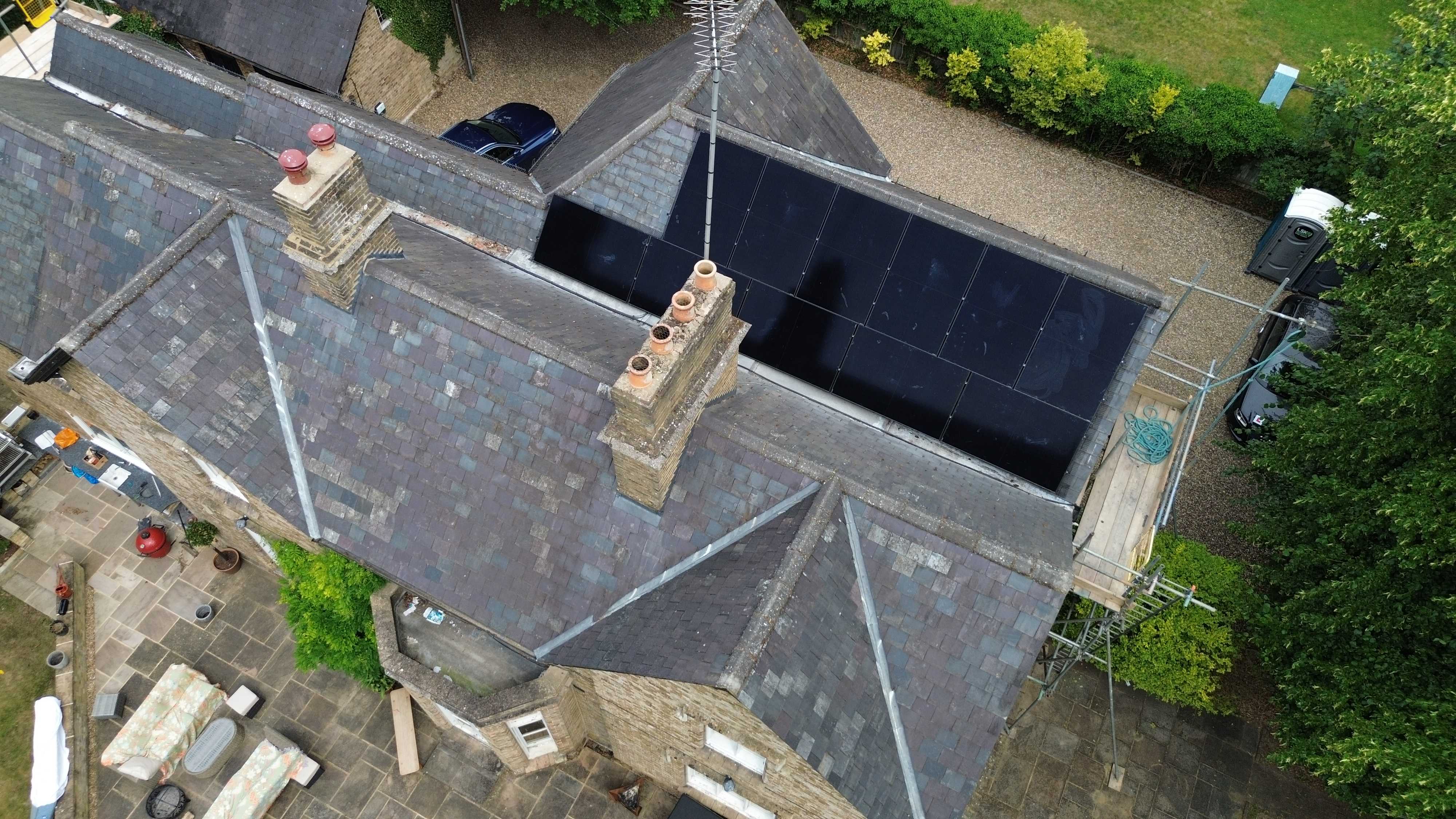
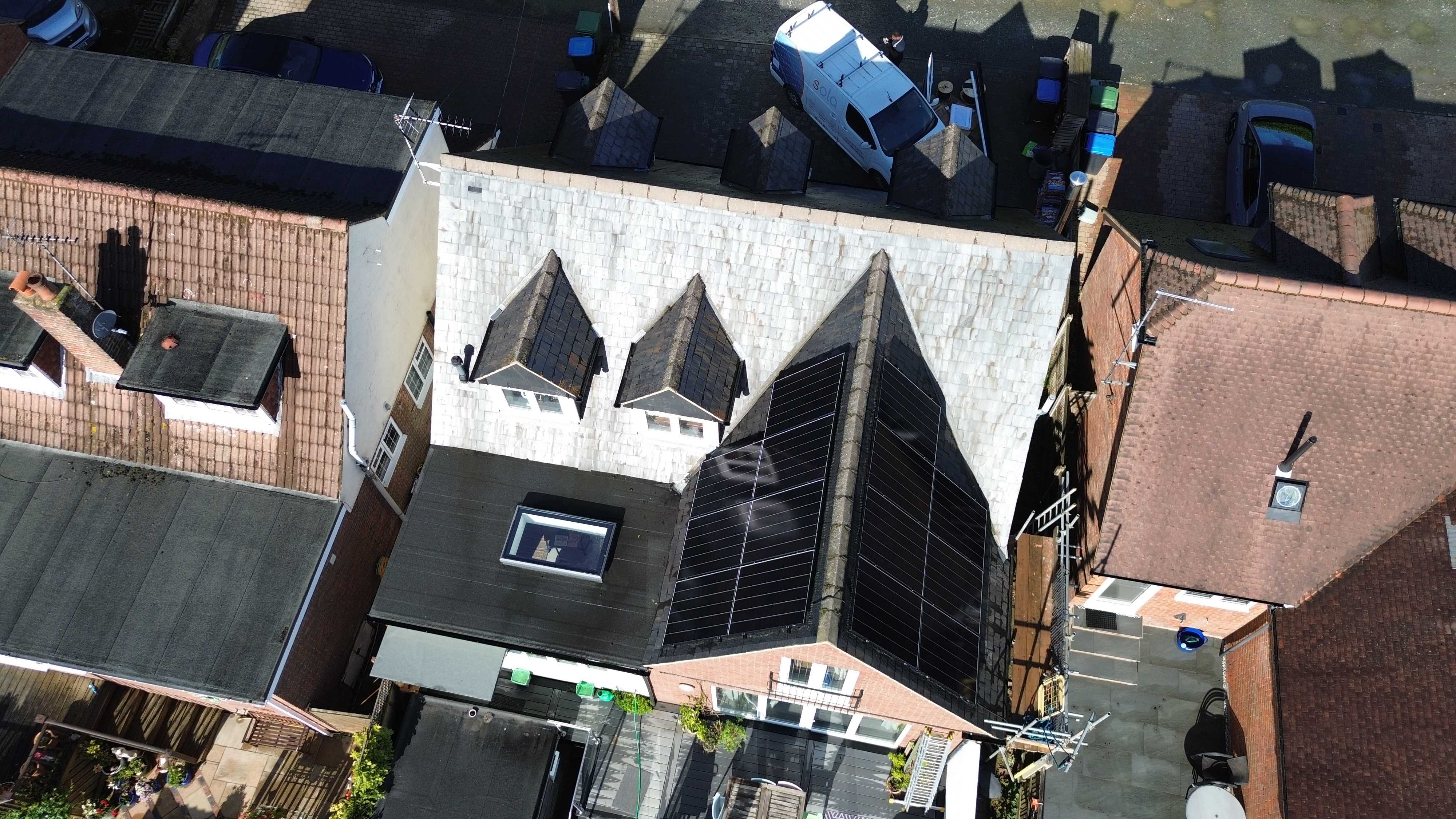
Step 4: Installation (1-2 days)
- Scaffolding erection
- Mounting frame installation
- Panel installation and wiring
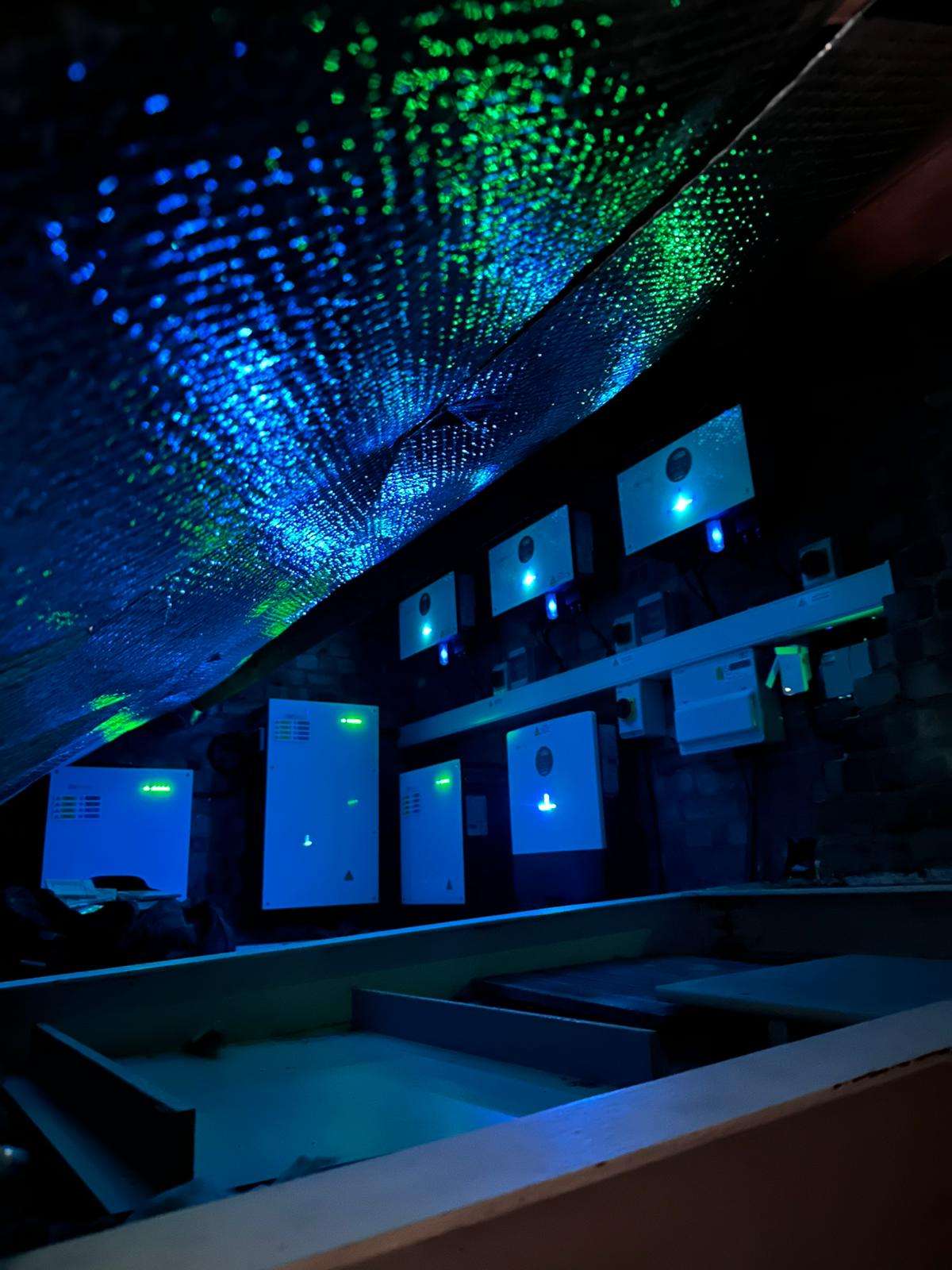
- Inverter installation and connection
- Testing and commissioning
Step 5: MCS Certification (1 week)
- MCS certificate issued
- Enables SEG registration
- Insurance-backed warranty activated
Chapter 5: What It Costs
Price depends on the roof, the access, the system size and whether storage is included, so a table of national ranges tells you very little about your own house. The Energy Saving Trust's own benchmark is that a domestic system is generally around 4.5 kWp and costs around £7,600, with battery storage adding roughly £5,000 to £8,000.
Costs, the 0% VAT deadline and a written system estimate for your own roof all sit on our solar panel installation page, because they depend on your property rather than on a national average.
Chapter 6: Warranties and Aftercare
Standard Warranties
Solar panels: a product warranty and a separate performance warranty — ask for both in writing, with their lengths and what output they guarantee. Inverters: a manufacturer warranty, often shorter than the panel warranty; ask whether an extension is available and what it costs. Installation:- A workmanship guarantee (ask each installer for the length, in writing)
- Insurance-backed protection
Maintenance
Solar panels need minimal maintenance:
- Self-cleaning in UK rain
- Professional cleaning every 2-3 years
- Annual inverter check
- Bird protection mesh recommended
Chapter 7: Smart Export Guarantee (SEG)
Export excess electricity back to the grid and get paid!
Every licensed supplier above a size threshold must offer an export tariff, but each sets its own rate and can change it, so the only reliable rate is the one on the supplier's own page on the day you sign up. We keep a full supplier-by-supplier table in our Smart Export Guarantee rates guide.
Requirements:- MCS-certified installation
- Export meter (smart meter recommended)
- System under 5MW
Chapter 8: Adding Battery Storage
Maximize self-consumption by storing excess solar energy.
Storage raises the share of your own generation you use instead of exporting, which matters because a unit you use is worth the full import price while an exported unit earns the export rate. Sizing depends on your evening demand rather than on the size of the array. See battery storage for the systems we fit.
Conclusion
Whether solar is worth it for your house depends on the roof, your daytime demand and what you pay for grid electricity. The figures in this guide are the national benchmarks to measure your own quotes against.
Ready to get started? Get your free quote from our MCS-certified team.
---
Related reading:- MCS certified solar installers — how to check an installer on the register
- Smart Export Guarantee rates — what suppliers pay for exported power