
What Your Solar Handover Pack Must Contain
The folder you get when the scaffolding comes down is your only proof the system was built to standard. Here is exactly what MCS requires in it.
What Your Solar Handover Pack Must Contain
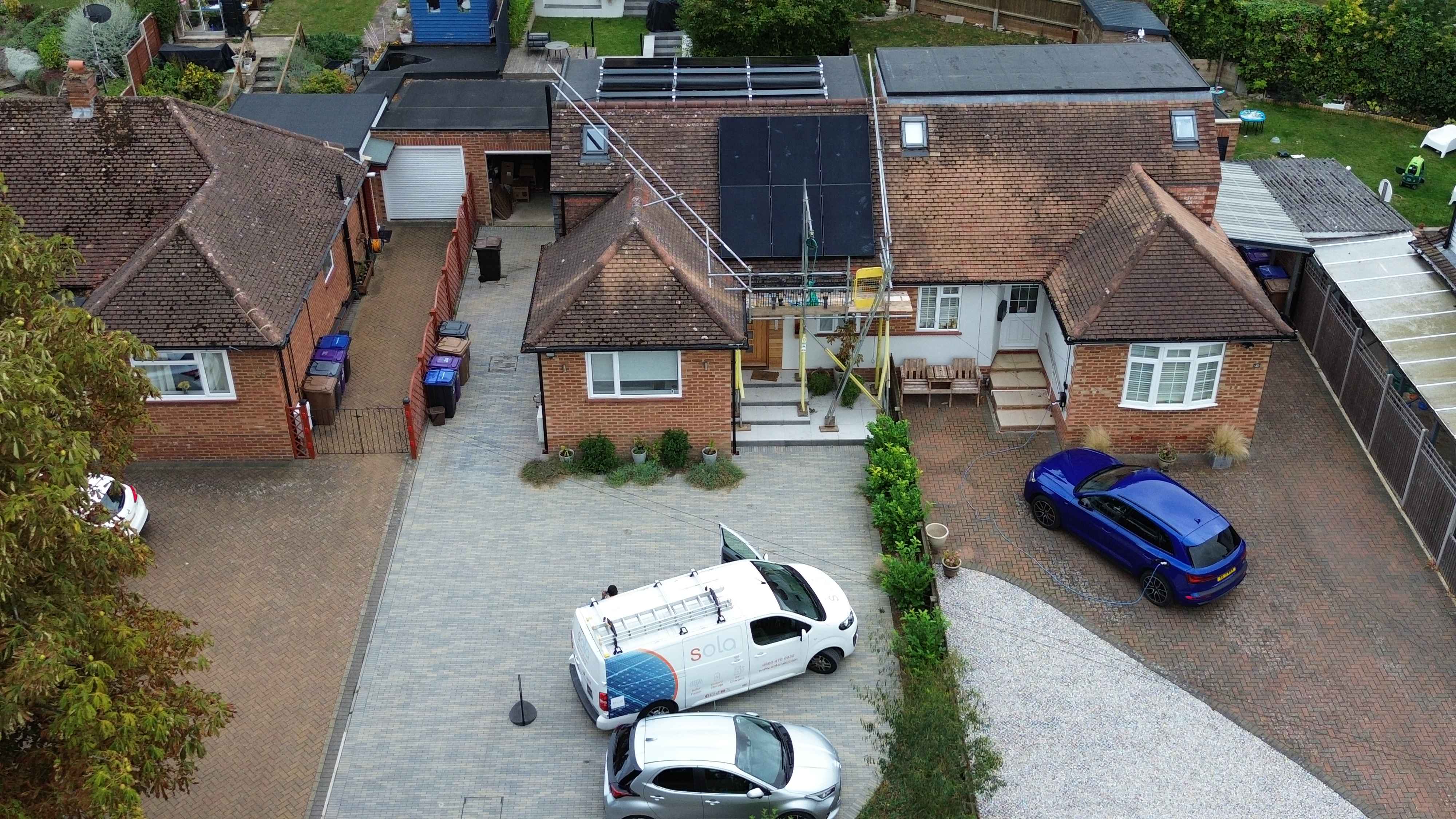
The day the scaffolding comes down you should be handed a folder. Most homeowners never open it, and plenty of installers never explain it. It is the only durable evidence your system was designed, installed and commissioned to a standard, and you will need it when you register for export payments, when you sell the house, and if anything goes wrong.
There is no guesswork about what belongs in it. MIS 3002, the MCS Solar PV Standard (Installation), sets out the contents. Issue 6.0 was published on 18 March 2026 and became mandatory for certified contractors on 18 June 2026. Here is what it requires, where each document comes from, and how to tell a complete pack from a thin one.
The pack is a requirement, not a courtesy
MIS 3002 separates two things that often get merged. There is the document pack, which the contractor must collate, and there is the handover, at which that pack has to be provided and explained alongside a signed declaration. An installer who emails you a PDF of the inverter manual has done neither.
The standard also sets the sequence: commissioned to a documented procedure, inspected and tested, and only then registered and certificated. Registration is permitted only after the system is fully installed and commissioned, never before, so a certificate dated before your install day is a red flag rather than efficiency.
What must be in the document pack
As a minimum, clause 6.2.1 requires the contractor to collate:
- Copies of all forms and checklists used to commission the system
- The maintenance requirements, and the maintenance services available
- Manufacturer user manuals and warranty details
- Any documentation or checklists required for incentive schemes
- The additional information listed in the IET Code of Practice for Grid Connected Solar Photovoltaic Systems
That first bullet is the one people skip. Commissioning forms are the record that the array was tested rather than merely switched on, and the IET Code of Practice is where that test regime comes from - so a pack with no test results has a hole in it.
The signed declaration at handover
Clause 6.3.1 requires a separate document, signed by the contractor, handed over with the pack. It has to contain at least:
- A declaration, signed by the contractor's on-site representative, confirming the installation meets the requirements of the standard
- Your name and address, and the site address if it differs
- The contractor's name, address and contact details
- A list of the key components installed
- The estimate of system performance, calculated by the standard's own method
- A recommended interval for the first periodic inspection
- MCS contact details, including the helpline number and email address
Two of those are quietly powerful. The declaration names an individual who was on your roof, which is a different kind of accountability from a company logo. And the recommended first-inspection interval is the only forward-looking date in the pack, so put it in a calendar on the day.
The MCS certificate arrives separately
The certificate is not produced on site. The installation has to be registered on the MCS Installation Database no later than 10 working days after commissioning, at which point a certificate is generated and sent to you, with instruction to include it in the handover pack.
No certificate, no export tariff. It is the single document a supplier will ask for, and it is the one most likely to be missing a fortnight after the job.
If 10 working days pass and nothing arrives, chase it that week rather than that quarter. Still choosing a company? Our guide to MCS certified solar installers explains what certification covers, and why solar PV and battery storage sit under separate standards.
Your own maintenance checks
Clause 7.3 is short and widely ignored: the handover documents must include the checks you should carry out yourself, how often, and what to do if you spot a problem. The standard's maintenance schedule varies by building type and occupancy and describes three tiers - visual checks by the customer, an intermediate contractor visit, and a full visit with tests needing specialist equipment. No customer-check list means you were handed a filing exercise rather than a handover.
The network notification you will never see
One document in the chain is not addressed to you at all, and it is worth asking for a copy anyway.
Under clause 5.1.9, notification to the Distribution Network Operator is the contractor's job. Which route applies depends on current rather than kilowatts: EREC G98 covers installations up to and including 16 A per phase, and EREC G99 applies above that. The Energy Networks Association puts 16 A per phase at 3.68 kW single-phase and 11.04 kW on three phases, and states that your installer must notify the DNO within 28 days of commissioning, calling it a legal requirement.
The threshold is the aggregate AC output of every generator at the property, and the ENA's definition of a micro-generator expressly includes electricity storage devices. So a modest array plus a battery can sit on the G99 route, where approval comes before installation. That is the commonest reason a solar programme slips.
Building Regulations: who notified, and how
Clause 5.1.6 requires the installer to make clear who is responsible for notification under the Building Regulations where the work is notifiable. Clause 5.1.7 requires that, where the installer is responsible, it is completed before handover, and allows self-certification in place of building control approval only where the installer is registered with an approved Competent Persons Scheme. Ask which applies to your job, in writing, before the work rather than after.
The pack at a glance
| Document | Who produces it | When you should have it |
| Commissioning forms and test results | The contractor | At handover |
| Signed declaration of compliance | The contractor's on-site representative | At handover |
| Performance estimate (standard method) | The contractor, at quote stage | Before you sign, and again in the pack |
| Manuals and warranty details | Manufacturers, collated by the contractor | At handover |
| Customer maintenance checks and intervals | The contractor | At handover |
| MCS certificate | Generated on the MCS Installation Database | No later than 10 working days after commissioning |
| DNO installation document | The contractor | G98: within 28 days of commissioning |
| Building Regulations notification or self-certification | Whoever the contract names | Before handover, where the installer is responsible |
Why a complete pack is worth money
Export payments are the immediate reason. Ofgem requires SEG licensees to offer a tariff to every eligible generator and requires any tariff to remain above zero, but eligibility must be demonstrated: certification of the installation and the installer for systems up to 50 kW, and export metered half-hourly with an export MPAN. The certificate in your pack proves the first part. Compare what suppliers pay with our SEG tariff comparison.
Resale and recourse are the longer-term reasons. A buyer's solicitor will ask for the certificate. An insurer may ask what fire and weather-tightness evidence exists for a non-standard mounting system. And if a panel underperforms in year four, the declaration naming the contractor and the components is what turns a conversation into a claim.
If you have not booked yet, the scope, the costs and the split of who files what are set out on our solar panel installation page. Ask any company you are comparing to send a blank copy of their handover document before you sign. The ones who have it to hand are the ones who use it.