
Solar Battery Storage Guide UK 2026
Everything you need to know about solar battery storage in the UK, including costs, best batteries, and ROI.
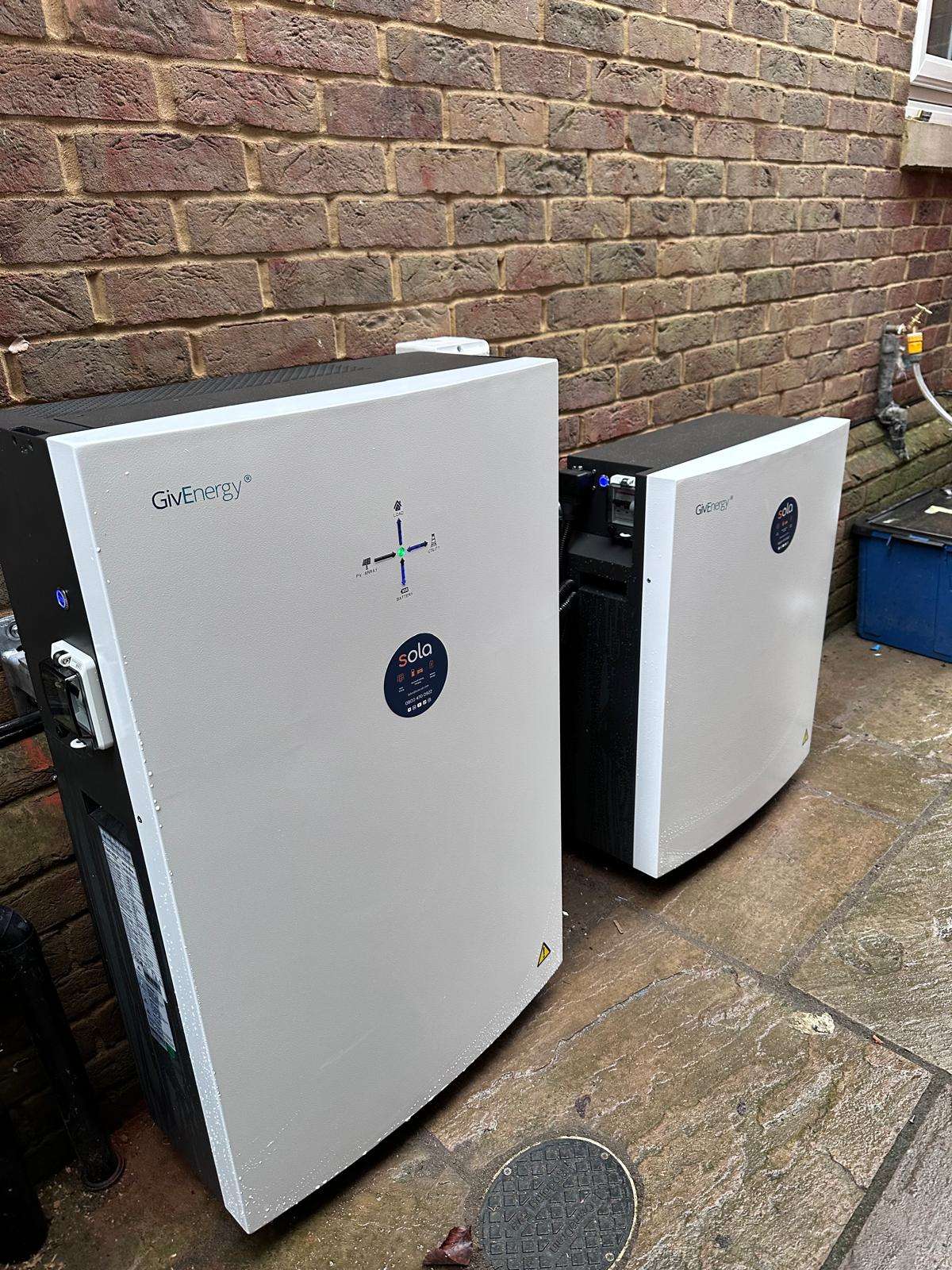
# Solar Battery Storage Guide UK 2026
## Introduction
Solar battery storage is revolutionizing how UK homeowners use renewable energy. By storing excess solar power generated during the day, you can use it during evening peak hours, dramatically increasing your self-sufficiency and savings.
This comprehensive guide covers everything you need to know about solar batteries in 2026.
## Why Add Battery Storage?
### The Problem with Solar-Only Systems
Without storage:
- Generate power during the day when you're out
- Export excess to grid for 15p/kWh
- Buy power back in evening for 34p/kWh
- Only achieve 30-40% self-consumption
With battery storage:
- Store daytime solar in battery
- Use stored power during evening peak
- Achieve 70-90% self-consumption
- Reduce bills by up to 80%
### Key Benefits
1. **Maximum Savings:** Use your own solar power 24/7
2. **Grid Independence:** Less reliance on utility companies
3. **Backup Power:** Some batteries provide power during cuts
4. **Smart Tariffs:** Charge cheap overnight, use when expensive
5. **Future-Proof:** Ready for time-of-use tariffs
## Best Solar Batteries 2026
### Top 5 Batteries Compared
#### 1. Tesla Powerwall 3
- **Capacity:** 13.5 kWh
- **Power:** 11.5 kW continuous
- **Cost:** £9,000-£10,000
- **Warranty:** 10 years
- **Best for:** Premium installations, backup power
- **Pros:** Sleek design, high power output, Tesla brand
- **Cons:** Expensive, Tesla-only support
#### 2. SIG Energy All-in-One 2
- **Capacity:** 13.5 kWh
- **Power:** 6 kW continuous
- **Cost:** £7,500-£8,500
- **Warranty:** 15 years
- **Best for:** Most homeowners, retrofit
- **Pros:** UK support, modular expansion, excellent app, unlimited cycles
- **Cons:** Larger footprint than some alternatives
#### 3. Sunsynk 5kW + 5.12kWh Battery
- **Capacity:** 5.12 kWh (expandable)
- **Power:** 5 kW continuous
- **Cost:** £4,000-£5,000
- **Warranty:** 10 years
- **Best for:** Budget-conscious, smaller homes
- **Pros:** Affordable, good quality, expandable
- **Cons:** Smaller capacity out of box
#### 4. SolarEdge Energy Bank
- **Capacity:** 10 kWh
- **Power:** 5 kW continuous
- **Cost:** £7,000-£8,000
- **Warranty:** 10 years
- **Best for:** Existing SolarEdge inverter owners
- **Pros:** Seamless integration, DC-coupled efficiency
- **Cons:** Requires SolarEdge inverter
#### 5. Alpha ESS Smile5
- **Capacity:** 5.7-11.4 kWh (modular)
- **Power:** 5 kW continuous
- **Cost:** £5,500-£8,500
- **Warranty:** 10 years
- **Best for:** Scalability, commercial
- **Pros:** Flexible sizing, good value
- **Cons:** Less established brand in UK
## Battery Technology
### LFP vs NMC Chemistry
**LFP (Lithium Iron Phosphate):**
- ✓ Safer, won't catch fire
- ✓ Longer lifespan (6,000-10,000 cycles)
- ✓ Better performance in UK climate
- ✗ Lower energy density
- **Recommended for UK homes**
**NMC (Nickel Manganese Cobalt):**
- ✓ Higher energy density
- ✗ Less safe, requires thermal management
- ✗ Shorter lifespan (3,000-5,000 cycles)
- ✗ Performance degrades faster
### AC vs DC Coupled
**DC-Coupled (Battery before inverter):**
- More efficient (95% vs 90%)
- Better for new installations
- Single inverter manages everything
- Less flexible
**AC-Coupled (Battery after inverter):**
- Better for retrofits
- Works with any solar system
- More flexible
- Slightly less efficient
## Sizing Your Battery
### Calculating Capacity Needed
**Step 1:** Check evening/night usage
- Average UK home: 6-8 kWh from 4pm-8am
**Step 2:** Account for solar generation
- Summer: Battery rarely needed
- Winter: Battery used every night
**Step 3:** Consider usage patterns
- Work from home: Smaller battery
- Out all day: Larger battery
### Recommended Sizes
| Home Type | Evening Usage | Battery Size |
|-----------|--------------|--------------|
| Small (2-3 bed) | 4-6 kWh | 5-8 kWh |
| Medium (3-4 bed) | 6-10 kWh | 8-13 kWh |
| Large (4-5 bed) | 10-15 kWh | 13-20 kWh |
## Installation and Costs
### Total System Costs
**Solar + Battery (new installation):**
- 5kW solar + 5kWh battery: £10,500-£12,500
- 5kW solar + 10kWh battery: £12,500-£15,000
- 6kW solar + 13kWh battery: £14,500-£17,500
**Battery Retrofit:**
- 5kWh system: £4,000-£5,000
- 10kWh system: £6,500-£8,000
- 13kWh system: £9,000-£10,000
### Installation Process
1. **Survey:** Assess location (garage/utility room)
2. **Design:** Size battery to match solar and usage
3. **Installation:** 1 day for battery + wiring
4. **Configuration:** Set charging/discharging rules
5. **Monitoring:** Set up app and optimize
## Savings and ROI
### Example: 5kW Solar + 10kWh Battery
**Daily usage:** 12 kWh
**Solar generation:** 12 kWh average
**Without battery:**
- Self-consume: 4 kWh (33%)
- Export: 8 kWh × £0.15 = £1.20
- Import evening: 8 kWh × £0.34 = £2.72
- **Daily cost: £1.52**
**With battery:**
- Self-consume: 8 kWh (67%)
- Export: 4 kWh × £0.15 = £0.60
- Import: 4 kWh × £0.34 = £1.36
- **Daily cost: £0.76**
**Annual savings:** (£1.52 - £0.76) × 365 = **£277**
**Combined savings (solar + battery):** £1,041 + £277 = **£1,318/year**
### Payback Period
Battery-only payback: £7,000 ÷ £277 = **25 years** ❌
**BUT** consider:
- Batteries enable smart tariff optimization
- Avoid future price increases
- Grid independence value
- Property value increase
## Smart Tariffs and Optimization
### Intelligent Octopus Flux
**Rates (2026):**
- Peak (4-7pm): 42p/kWh
- Day: 25p/kWh
- Off-peak (2-5am): 18p/kWh
- Export: 24p/kWh
**Strategy:**
1. Charge battery from grid 2-5am (18p)
2. Use battery during peak (save 42p)
3. Export during peak (earn 24p)
**Potential savings:** Additional £300-£500/year
### Battery Trading
Advanced users can:
- Buy cheap electricity at night
- Sell expensive during peak
- Never touch solar generation
- Maximum arbitrage potential
## Backup Power
### Whole-Home Backup
**Batteries that provide backup:**
- Tesla Powerwall 3: ✓ (13.5 kWh)
- SIG Energy All-in-One 2: ✓ (13.5 kWh)
- SolarEdge Energy Bank: ✓ (10 kWh)
**How it works:**
1. Grid power lost detected
2. Battery disconnects from grid (0.02s)
3. Powers essential circuits
4. Lasts 8-24 hours depending on usage
**What you can power:**
- Lights and sockets
- Fridge/freezer
- WiFi router
- Phone charging
- Heating controls
**What drains battery fast:**
- Electric shower (9kW)
- Oven (3kW)
- Kettle (2kW)
- Tumble dryer (2-3kW)
## Maintenance and Lifespan
### Expected Lifespan
Modern batteries last:
- 10-15 years before replacement
- 6,000-10,000 charge cycles
- 70-80% capacity at end of life
### Zero Maintenance Required
Batteries are sealed units with:
- No moving parts
- Self-regulating temperature
- Automatic firmware updates
- Remote monitoring
## Common Questions
### Can I add battery later?
Yes! Any system can be retrofitted with AC-coupled battery. DC-coupling requires compatible hybrid inverter.
### Will it power my home during cuts?
Only if battery has backup capability. Check specifications. Installation requires separate circuit.
### Can I expand capacity?
Most batteries are modular and expandable:
- SIG Energy: +2.6 kWh modules
- Tesla: Stack multiple Powerwalls
- Alpha ESS: +5.7 kWh modules
### What about degradation?
LFP batteries lose 10-20% capacity over 10 years. Warranties typically guarantee 70-80% capacity at end.
## Conclusion
Solar battery storage dramatically increases the value of solar panels. While payback periods are long when considering batteries alone, the combination of solar + battery offers:
- 70-90% self-sufficiency
- £1,000-£1,500 annual savings
- Grid independence
- Backup power capability
For most homeowners installing solar in 2026, a battery should be included from day one.
Ready to add battery storage? [Get your quote](#quote) from our battery specialists.
---
**Related Articles:**
- [Tesla Powerwall 3 Review](#)
- [SIG Energy vs Tesla Comparison](#)
- [Smart Tariffs Explained](#)